
Election Commission of India: Casting a puritanical eye on India: The challenge of
making the world’s biggest democracy’s polls even more free and fair
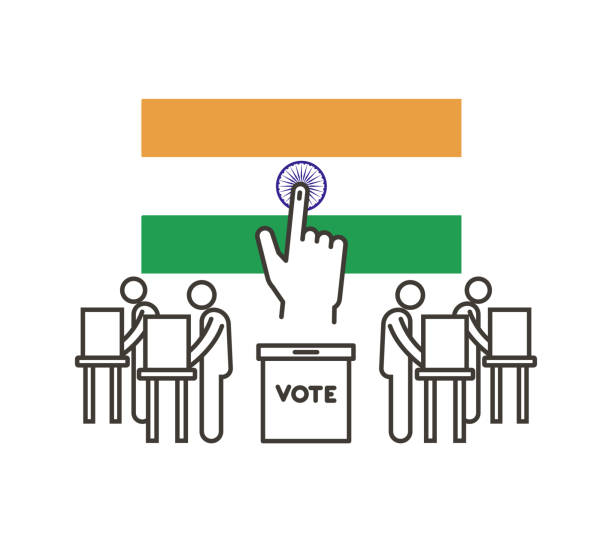
Election Commission of India The ECI has the most legal obligation in the effective working of the Indian democracy. Being the constitutional authority mandated with the responsibility of supervising election in India, the ECI supervises elections in manner that is free, fair and transparent. This is more so since India as a country has large population, diversity and competitive structure that makes the work of the commission even more important. This blog specifically focuses on the Election Commission of India, it’s formation, its working, its authority and some of the problems faced by it while conducting elections in the largest democracy of the world.
Table of Contents:
1. **Background of the Election Commission of India**
2. **The Origin and Development of the Election Commission**
3. **Formation of The Electrical, Control and Instrumentation**
4. **Powers and responsibilities of the European Citizens’ Initiative**
5. **How the ECI Achieves Democracy in Ugandan Elections**
6. **CONCISE AND PERSERVICE APP****Technological Innovations in Elections**
7. >This paper discusses some of the challenges faced by the Election commission of the united Republic of Tanzania.
8. **Election Reforms: Golwalkar, M.S. (2017). ‘‘Strengthening Indian Democracy.” Journal of Indian Democracy 21.
9. **Conclusion**
1. A brief understanding of the Election Commission of India
The Election Commission of India (ECI) refers to an independent statutory organization responsible for the management of elections within India. On January 25, 1950 it was set up and was begun a day prior to the event of India becoming a republic. In as much as the commission conducts the elections, it does so following the standards of democracy in order to meet transparency, impartiality and credibility.
The ECI is entrusted with conducting elections to:
– The lower house of the Indian Parliament or Lok Sabha
– The Rajya Sabha (the upper house of the Indian Parliament)
: The State Legislative Assemblies
The Constitutional Cherishes of President of India and Vice President of India
2. Historical Background of the Election Commission
The Election Commission of India was established under the Article 324 the constitution of India. It was initially a one man institution but was changed to a multi-member one in 1989 with the CEC and two Election Commissioners. This reform was effected to enable the commission to have® the required manpower to deal with increasing concerns of elections in India. Election Commission of India
Election Commission of India Finally, the position has changed its functions and work characteristics from the year it was founded. From basic tallying of votes from papers and ballot boxes, the commission has gone hi-tech with Electronic Voting Machines (EVMs), Voter Verifiable Paper Audit Trails (VVPATs) and lately considering innovative technologies such as use of blockchain in a voting system.
3. Structure and Composition of the Election Commission of India
The Election Commission of India is a three-member body consisting of:
1. **Chief Election Commissioner (CEC)**: CEC stands for Chief Electoral Officer or Commissioner of the Election Commission. Despite the fact that the CECs exercise the powers equivalent to the other Election Commissioners, they usually carry a deciding vote whenever the commission is split.
2. **Election Commissioners**: They are hold senior official positions that help the CEC discharge its roles in enhancing the efficient running of the electoral processes.
The President of India appoints the CEC and the Election Commissioners as well. They serve for a term of six years or until the age of 65 years whichever is first. They can be expelled only in the manner which simulates impeachment of a judge of the Supreme Court, thus, guaranteeing their impartiality and, thereby, saving them from political influence.
4. Powers and responsibilities of the European citizens initiative or commonly known as ECI
The Election Commission of India has very extensive powers to safeguard the free and impartial election. These powers include:
1. **Supervising the Entire Election Process**: Also here it could be noted that the ECI has the constitutional powers to oversee, guide and monitor the whole electoral process. This assembles involve tasks such as compilation of electoral rolls, observation of political campaigns, and undertaking of poll activities on election day.
2. **Model Code of Conduct**: The ECI was given some extraordinary powers, among them the ability to enforce the MCC during the Election process. The MCC sets the standard of political parties and the candidates in order to facilitate a free conduct of the elections. If there is a violation of the MCC certain action can be taken by the ECI which is punitive in nature.
3. **Electoral Rolls and Voter Registration**: The ECI is authorized to compile and revise the rolls of voters. It undertake exercises from time to time to ascertain that every qualified persons in the nation are registered voters.
4. **Conduct of Elections**: The ECI is also formulated for supervising and conducting the elections both – the National and State. This includes; determining the time when the election will be held, arranging for polling stations, and also the security during the exercise.
5. **Monitoring Political Expenditure**: With a view to checking the abuse of money in relation to elections, the ECI regulates the expenses of the candidates as well as the political parties. This has prohibited how much candidates can spend within an election period.
6. **Dispute Resolution**: The ECI independent quasi-judicial body it also adjudicates matters arising from the election such as disqualification of candidates.
5. The ways through which the ECI guarantees and or facilitates free and fair elections
Election is significant for the tenability of any democracy because it determines the electoral process’s legitimacy. The Election Commission of India has formulated many strategies to make the elections in India free and fair.
Electronic Voting Machines (EVMs): Electronic Voting Machines which was implemented in the 1990s brought a drastic change in the theory and practice of conducting elections in India. These machines lessen the amount of time required to tally the votes and also eliminate possibility of vote tampering.
Voter Verifiable Paper Audit Trail (VVPAT): To increase transparency the ECI in elections introduced VVPATs. The electronic voting machines produce a voter paper that shows the vote given by an individual in order to cast a check on the voting. It is also important because in cased of any disagreement, the paper work can be used to validate the findings.
Deployment of Security Forces: This is because the ECI liaises with the security agencies to ensure that the election are carried out peacefully. There are police forces around polling stations , and every measure is taken to ensure that violence and threatening of voters is avoided.
Strict Monitoring of Campaigns: The ECI tracks political campaigns in order to ensure that no political party breaks the Model Code of Conduct. It monitors compliance with hate speech, misrepresentations and other unfair strategies to influence voters.
Expenditure Monitoring: To stop using black money and other unlawful sources for fundings in elections, the ECI analyzes the candidates’ expenses. Accumulated costs need to be reported with specified details and any overspending often leads to disqualification.
6. Technological Innovations in Election
The EC of India adopted technical means to make the electoral process more effective and less vulnerable to manipulations. Some key technological innovations include:
National Voter Service Portal (NVSP): One of the services offered through the NVSP is registration of citizens to vote, verification of voter’s listing and making modifications on the information recorded.
Election Management System (EMS): The EMS is an integrated system utilized by the ECI to deal with election-related data, from polling booths information, voter roll and the distribution of resources.
EVM and VVPAT: Earlier, the discussions made were on EVMs and VVPATs, which have become instrumental tools in the faster, accurate and transparent electoral processes.
Blockchain-Based Voting: The ECI has even been looking at how it can employ blockchain technology for conducting its vote away from the Parliament. It could also make it easier for voters often choose their leaders freely especially those who live in remote areas or overseas to vote from wherever they are in the world safely.
7. Here the challenges faced by the Election Commission are as follows:
Despite its efforts to ensure free and fair elections, the Election Commission of India faces several challenges:
Election Violence and Intimidation: The contest of election in some region of India is occurred through the violence, voting carnyption and booth capturing. Maintaining the security of voters and vote itself in such regions stays a strenuous mission.
Misinformation and Fake News: Social networking has contributed to the spread of wrong information and NC in the course of elections. Such information must be fought by the ECI in order to avoid distorting the actual situation among the population.
Political Pressure: The ECI is an autonomous organization and still there are times over the pressure from the political parties especially during crucial elections. Thus, the ECI can’t be affiliated with any organization and its official position has to be non-partisan.
Voter Apathy: Generally, voter turn out in urban regions is less than in rural regions. Another key problem for the ECI is popularizing and enthusiasing citizens, especially the youth and urban people, to participate in elections.
Money Power in Elections: This is true even with attempts to oversee the flow of political funding, with figures used constantly to sway the voters. Currently the ECI lacks sufficient policies and measures to stop the impact of black money in elections.
8. Election Reforms: Deepening Democracy in India
To further strengthen the democratic process in India, several electoral reforms have been proposed:
Simultaneous Elections: The conduct of the Lok Sabha and the State Assemblies simultaneously could help in ir reduction of the frequency the country has to undertake elections.
State Funding of Elections: To minimize on the effect of money in the determination of the outcome of the election, there has been proposed the concept of state funding of political campaigns.
Strengthening Anti-Defection Laws: To counter the group the ECI has supported amendments to the anti defection law to rein in elected representatives from switching parties.
Use of Technology: By increasing the utilization of technology for example, Internet voting, elections are likely to be more convenient for people with no time, or those living in foreign countries or other areas.
9. Conclusion
The Election Commission of India performs an unprecedented role in the Indian democracy. Of particular interest is its importance in entrenching free and fair electoral processes to make the Indian populace continue to believe in the system. The actors of the ECI whenever practiced have achieved enormous success that have revolutionized the resource optimization, election transparency, but whenever in practice, it continues to grapple with issues to do with influence of money, fake news, and political pressure embraced. Enhancing the institution through reforms and technology will enhance its capacity to organize the election in a way that respects the

Yo, Filbetcasino, is legit! Been hitting some nice wins there lately. Smooth gameplay and quick payouts. Definitely worth checking out – filbetcasino